Women Clowns – Half of The Whole Truth
This blog/essay is to provide a little of the background which is the source that led to contemporary Women Clowns.
INTRODUCTION
When discussing Clown, clowns, clowning, and clown teaching I often refer to clowns whose work is readily available via youtube/online. And specifically I often choose famed artists whose work was often (not always) but often made for cinema and television. The reason is that those provide excellent examples of their works, in abundance and variety. However many of those clowns also had careers in live performance.
I also often prefer to refer to clowns of ‘the past’ because they still have so much to offer us involved with Clown as a field.
Many of the people I refer to had prolific careers as exemplary live performers mainly on stages indoors. Some of those clowns also continued to perform live even while or after their screen (film or tv) career had faded away.
Additionally there has been a real problem created by clown ‘teachers’ when they are often obsessive about what a ‘real’ clown is or isn’t. Those same ‘teachers’ (including directors) have their own idea of aesthetics for clowns. And that too tends to be obsessive and what I rate as fundamentalist.
In the past a professional clown was very multi-skilled. However, many of the greatest clowns were not acrobats or dancers per se or jugglers or magicians or bona fide singers or musicians. VERY often the clown was a performer who had a knack by nature for clowning. Often, VERY OFTEN, their main skill was Acting.
Particularly, but not only, many of the early great women clowns had a solid training as a youth in dance and particularly a base in Ballet.
Therefore, I was inspired to write this blog/essay now because of a fine 25 minute documentary about one great contemporary woman clown who began as a dancer and the documentary is made by a dancer and the focus is how dance was central to her career as a clown and actor. That video is linked at the end of this blog/essay.
UNIVERSAL PRINCIPLE – THE MATRIARCHAL/PATRIARCHAL LINEAGE OF CLOWN
Being a lifetime student of “universal principles”, including as found throughout my own Culture, and, as applied and adapted to my theatre work. Those universal principles have been applied to my Clown, Acting, Theatre and Creativity from the beginning of my career 50+ years ago.
Universal Principles are interwoven throughout my method and creative exercises. As well as into my 2 books and 100+ blog/essays. Some years ago I explained that “The Clown Movement” as I call it began in its contemporary guise in 1947. I also coined the term and concept of “The Matriarchal/Patriarchal Lineage of Clown”. That I usually place, only for practical reasons, in the period when “The Matriarchal/Patriarchal Lineage of Clown” began to flourish at the very end of the 1800’s.
That is simply due largely to the freedom that – women, minorities, and those without suitable work options – found in American Vaudeville and British Music Hall in particular due to the commercial opportunities for work. That coincided with The Suffragette Movement, as well as many social and technological developments. The Arts and Performing Arts have long been ‘revolutionary’ in terms of social morals, ethics, and activity.
Notably, the traditional Circus and its source Commedia dell’Arte had already integrated women into their artforms. That was practical much more than idealism!!! Traditional Circus and Commedia dell’Arte were family run businesses which traveled as a family and/or a collective of families. Traveling theatre troupes were also family oriented for survival and for artistic reasons. My commedia teacher, Carlo Mazzone-Clementi explained that to his generations of students. That family, famiglia in Italian is directly related to famine. Therefore he felt that to create a real commedia troupe they had to ‘starve’ a bit together in order to survive and flourish together.
A SOURCE OF UNIVERSAL PRINICPLES
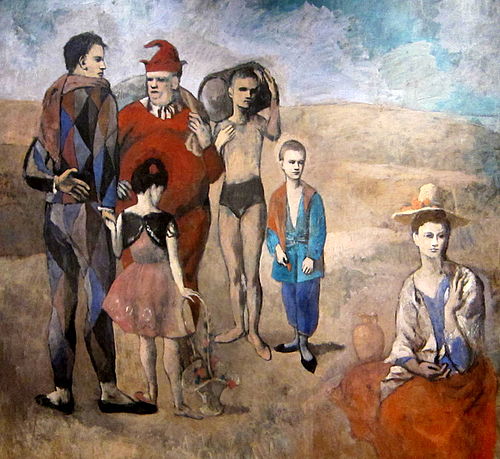
The universe, according to Taoism, is made of a combination of two forces – Feminine-and-Masculine. Yin-Yang. The Tao is the unity and fluidity of those two forces. Each force also contains an element of the other.
More than ‘opposites’, Feminine and Masculine inform each other, continually. Possibly in all known aspects of Life.
I saw a lot of great women clowns on television during my youth.
This short blog/essay is to give an overview and a few thoughts that are prominent to me when I consider “Women Clowns”.
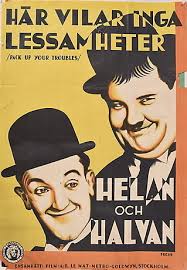
Laurel & Hardy were known in Swedish as Helan och Halvan which means ‘the whole and the half’. Each of the pair, Oliver Hardy and Stan Laurel in their screen character had a fine fifty/fifty mix of feminine/masculine. In part, for that reason “The Laurel & Hardy Exercise” in my method is central after the chronological warmup. For that exercise, there are only six cues or instructions, and each is very clear and simple.
Drama/Theatre
Historically, up to a certain period of History clowns were most often Men. But, that is only partially true in that there were Women/Female Clowns of sorts in the Commedia ‘dell’Arte. Commedia dell’Arte was the traveling comedy clown based theatre from Renaissance Italy. There were many troupes and often each was founded by one or two small families. It is believed that 2 such troupes performed in England in the late 1500’s. That preceded and seems to have overlapped with the lifetime of William Shakespeare. Thus one theory is that Shakespeare may have seen or even known those two troupes? There are reasons to believe that one of Shakespeare’s wide range of influences that Commedia dell’Arte was one influence. Ten of Shakespeare’s plays are stories located in Italy. There are a variety of theories about Shakespeare’s connections with Italy and/or Italians in London.
Shakespeare’s plays like a norm in most Drama have plots involving Women and Men roles/characters. In all sorts of varients.
Vaudeville and Popular Stage Entertainment
By the late 1800’s there began to be some prominent Women/Female clowns in Vaudeville, Music Hall, Variety. Since the earliest film comedies there have always been women in clown roles and interacting with men in clown roles.
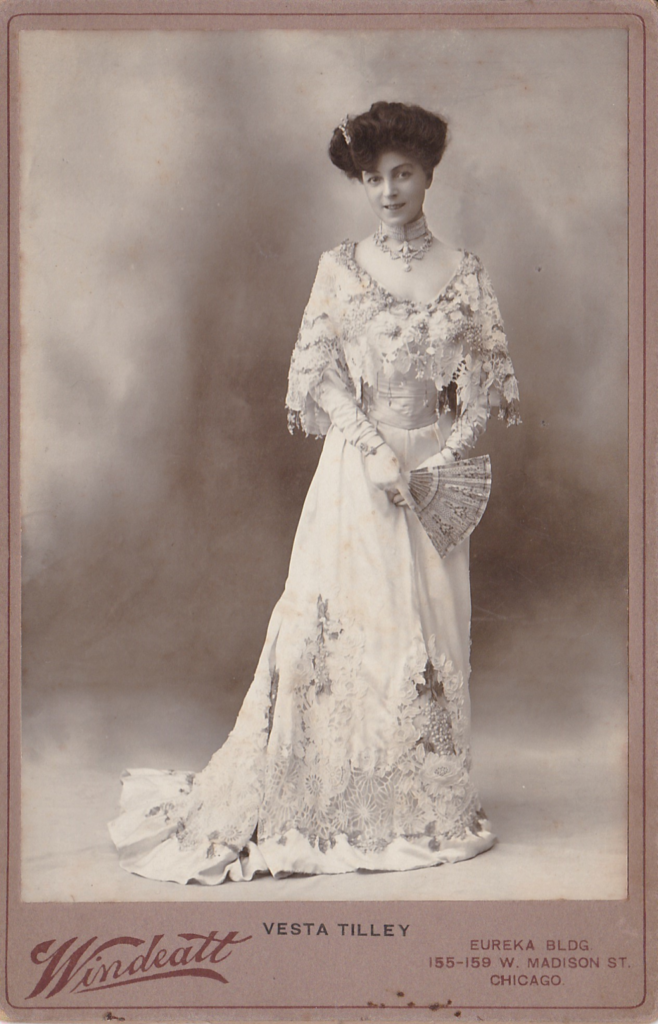
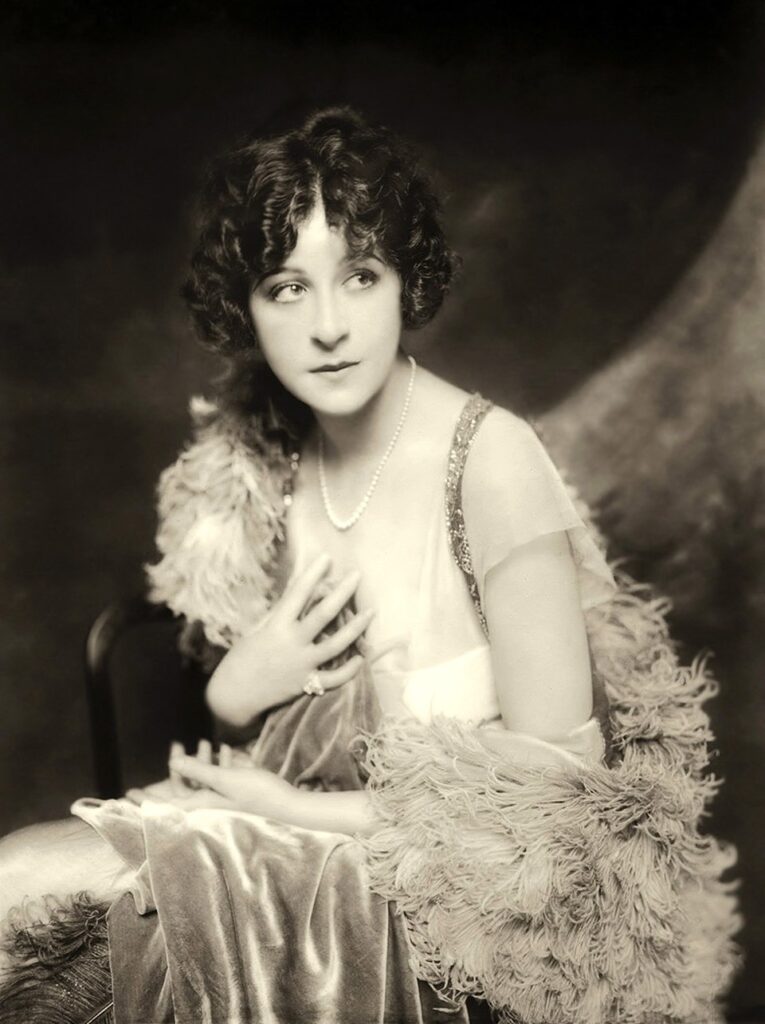
Two of the earliest Woman/Female clowns of prominence in modern times in live performance were Fanny Brice in the USA, and, Vesta Tilley of Great Britian. Tilley toured 6 times in American Vaudeville as a headliner. Buster Keaton’s Mother did a slapstick act with her Husband. When Buster was 3 years old he was added into the act that then became known as The Three Keatons.
The actress/clown Julie Andrews, she who played Mary Poppins in the film, starred also in the film Victor/Victoria when she portrayed an interpretation of a Music Hall ‘clown’ famed as a Male Impersonator. That was Ella Shields. Shields famously performed one song that was a direct parody and homage to Vesta Tilley. Julie Andrews performs as Shields doing that particular parody/homage to Vesta Tilley in the film of 1982.
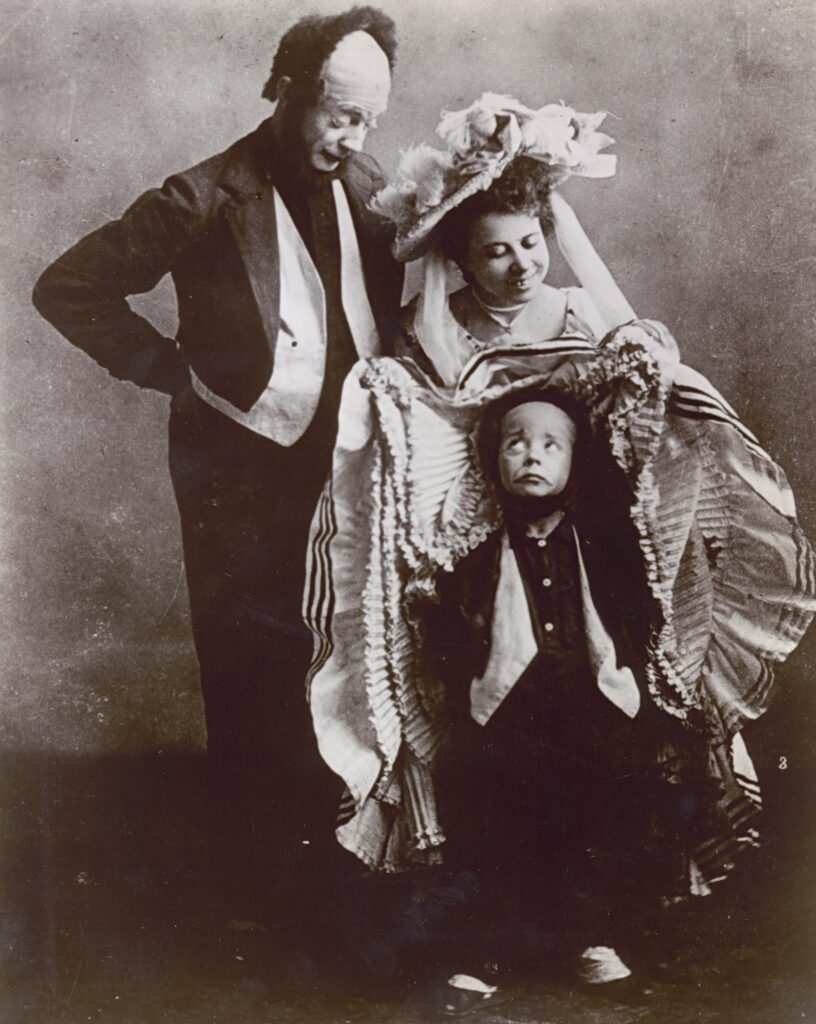
In 1908, Brice dropped out of school (age 16) to work in a Burlesque revue, “The Girls from Happy Land Starring Sliding Billy Watson”. Two years later, she began her association with Florenz Ziegfeld, headlining his Ziegfeld Follies in 1910 and 1911.
Brice began performing her clown character Baby Snooks in 1912. “In 1904, George McManus began his comic strip, The Newlyweds, about a couple and their child, Baby Snookums. Brice began doing her Baby Snooks character in vaudeville, as she recalled in an interview shortly before her death: “I first did Snooks in 1912 when I was in vaudeville. At the time there was a juvenile actress named Baby Peggy and she was very popular. Her hair was all curled and bleached and she was always in pink or blue. She looked like a strawberry ice cream soda. When I started to do Baby Snooks, I really was a baby, because when I think about Baby Snooks it’s really the way I was when I was a kid. On stage, I made Snooks a caricature of Baby Peggy.” (wiki online).
CINEMA
Nearly all of the greatest early Hollywood clowns such as: Harold Lloyd; Buster Keaton; Charlie Chaplin; Laurel & Hardy; worked in most of their films with female co-star. Those actresses either knew how to clown or how to perform with a clown.
Although often the actress was not in a clown role per se we can say that none of the the great clowns’ most notable films could have a satisfying dramatic story if there were no Female role central to the story. In most cases there was a ‘love interest’ theme within or central to the film’s story.
Eventually, in particular with the arrival of television as a popular source of entertainment and the next level of modernity as a result of social changes including during WWII and soon after, then the balance between the women and men clowns evened out in new ways.
However, notably there were women clowns in films who were definitely noteworthy!! Just a few of the earliest examples were Mae West (born in 1893); Martha Raye (born in 1916); Marjorie Main (born in 1890). Although Main had a full stage career as an actress in all sorts of roles which were more serious, she most famous for her 10 comedy/clown movies of “Ma and Pa Kettle” even though her stern guise ever present so too was her knack as a ‘serious’ clown.
RADIO DRAMA
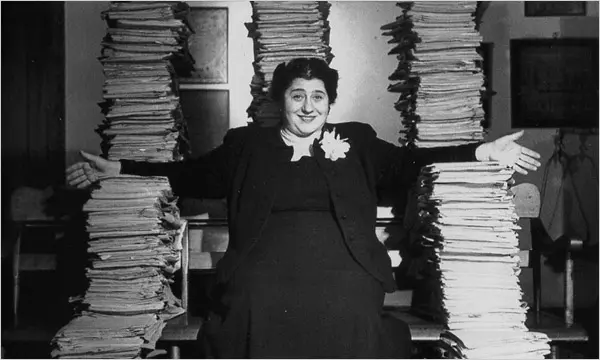
Her show was then adapted from Radio to Television in 1949 making it the first TV sitcom. Gertrude Berg (October 3, 1899 – September 14, 1966) was an American actress, screenwriter, and producer. A pioneer of classic radio she was one of the first women to create, write, produce, and star in a long-running hit when she premiered her serial comedy-drama The Rise of the Goldbergs (1929)… She wrote nearly all (15 minutes episodes) of the radio episodes (more than 5,000) plus a Broadway adaptation, Me and Molly (1948). The Goldberg family struggles, and the portrayal of first-generation immigrants seeking to assimilate into American life, were relatable to many in the radio audience. Radio seemed to produce a common place to tie patriotism and families together. The program’s success was largely because of the familiar feelings the scripts evoked in the American people. The scripts from the first season were later published in book form.
TELEVISION
Berg’s show was then adapted from Radio to Television in 1949 making it the first TV sitcom.
Whereas Berg’s works were comedy they were also lighthearted clowning. There had already been very physical female slapstick clowns in films. Importantly the clown Imogen Coca who became a major tour de force in clowning via her early career as a dancer.
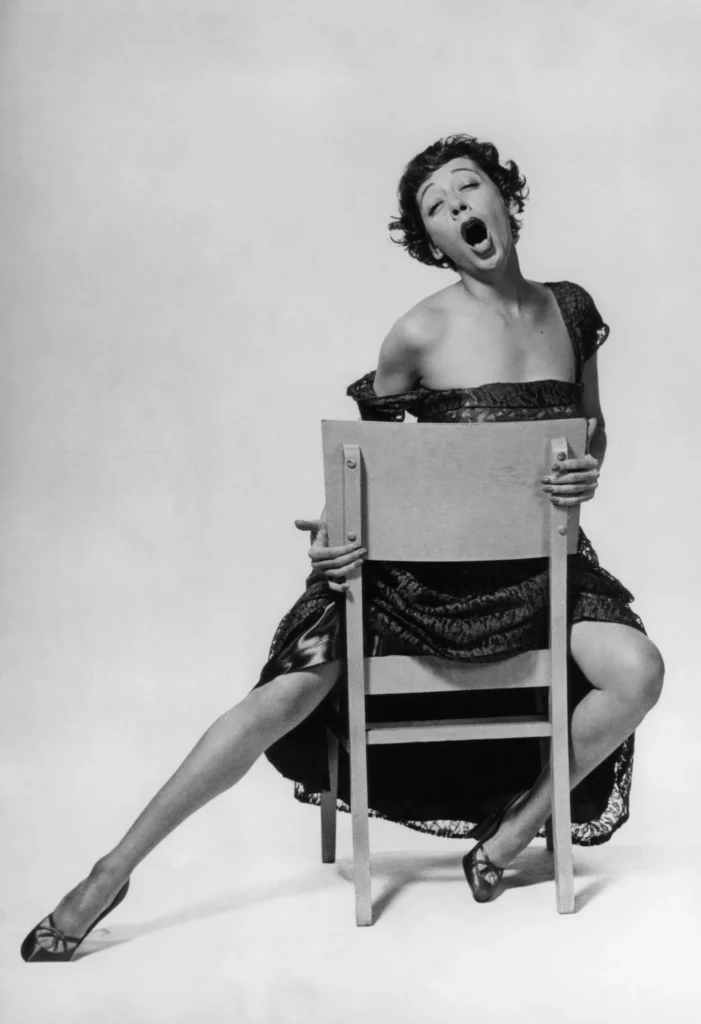
“Hoping for a career as a dancer, she moved to New York City when only fifteen, and got her first job on Broadway in the chorus of When You Smile (1925). In the early ’30s she became a headliner in New York nightclubs like the Rainbow Room, the Silver Slipper, and Café Society Uptown, and appeared in Broadway revues, singing the likes of “Lets Go Out In the Open Air” and “It Was Never Like This.”
The comic element entered her act quite by chance in New Faces of 1934: during a rehearsal, the theatre was freezing cold, so the choreographer lent her his overcoat. She and three male dancers began to clown around, improvising silly dance steps in an effort to keep warm; the choreographer saw the comic effect and convinced them to repeat their routine in the show, complete with overcoat. It had the audience in stitches, and Imogene Coca’s career in comedy was born. She spent the next four summers working in the Poconos with comedians like Danny Kaye and Carol Channing, and played comic parts in three films, but back on Broadway she continued to sing and dance in revues until 1945. Robert Burton, whom she married in 1934, did most of her musical arrangements.”
Coca though was there to usher in women clowns on TV from 1949 when she began working with the clown Sid Caesar. Unlike Berg’s sitcom and the other few sitcoms that would start in 1951, the Coca/Caesar work was in short skits. Each skit though had a drama/story. They worked together for 10 years. Making hundreds of skits. With Coca/Caesar were two other main clowns Carl Reiner and Howard Morris.
From 1954 to 1958 another female clown joined the show. Nanette Fabray. She like Coca was a professional dancer and singer first. Fabray also acted in numerous stage plays. Here’s a special ancecdote from her.
Nanette Fabray – 3 minutes – https://www.youtube.com/watch?v=nezkyuqTVxI
Women Clowns From Back Then – Transition Into Now and New
During the 1970’s when I began in clown and theatre, there was a distinct difference between women clowns and men clowns. They are not the same. They are equal. They are different. Then (in the 1970s) and still today… many in clown and clown teaching will say ‘women aren’t really clowns’. Well actually no one could say that now as they would be “canceled”. It was absurd then (in the 1970s when I started) as it is now. Even if there are obvious, blatant differences as there are between men and women in all their variants.
Referring to the most cliche French saying “vive le difference”. As I like to quip, we love the French because they know the difference between Brie and Camenbert cheese; as well as the difference between Bourdeaux and Beaujolais. Two fine cheeses and two fine wines. Each with different properties. So to with Women and Men clowns. I have OFTEN found that women clowns MAY be better actors as clowns than men actors as clowns.
By the way those may not be the only gender variants and thus the differences between mqy thus multiply and vary accordingly. Let the French help us here too with another of their great cliches commonly used in English “C’est la vie” (‘such is life’).
But Post-I Love Lucy; Coca/Caesar and company; Carol Burnett and company and a LOT more women clowns who were emerging in the 1960s who were utterly FANTASTIC clowns… clearly women can clown!
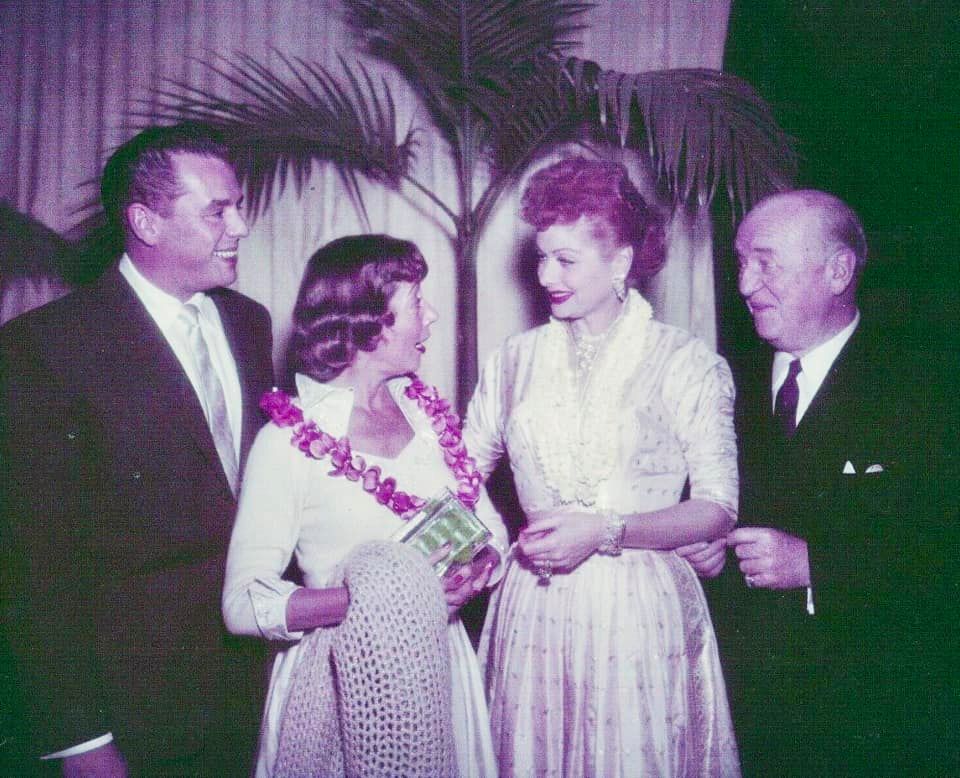
In the 1960s via television we could see many women clowns who were primarily live performers in clubs and nightclubs throughout the USA. Some of the main ones were: Moms Mabley; Phyllis Diller; Totie Fields; Joan Rivers; Anne Meara of Stiller & Meara (Parents of film actor/director Ben Stiller). And notably different from the others just mentioned was Sharri Lewis.
But as the cliche olde school Show Business adage advised I’m saving the best ’til last. It is for her wonderful little documentary that I was motivated to write a snipet about this HUGE topic – Women Clowns – Half of The Whole Truth.
This blog/essay was to ‘cut to the chase’ and provide a glimpse into the massive recent history of women clowns and how they led to modernity in clown which I call “The Clown Movement”. I locate that as starting in 1947. I have written about that in Clown Secret book and also in a few blog/essays.
When the ‘cultural revolution’ was blooming in the 1960’s there began two fine and truly modern for their time clown shows that I will highlight. There were others too!!!
One was The Smothers Brothers Show that began in 1965. The other was Rowan & Martin’s Laugh-In that started in 1968. Laugh-In had several outstanding female clowns!!! Each extremely unique. Ruth Buzzi; Lily Tomlin; Goldie Hawn. Jo Anne Worley; Judy Carne. Plus the show had many guests including Barbara Feldon (of Get Smart tv series). Each of those actresses/clowns deserves their own recognition for sure.
However, for several reasons I want to present Goldie Hawn’s story from Ballerina, to Clown, to Actor. In a way it is an archetypical story. Here it is so well done by a former dancer who is making a long series of documentaries about past dancers of note.
Goldie Hawn: The Unknown Dance Life Behind the Comedy Icon – The Rest of the Story. From the youtube dancers series BackToGreat by Miller Daurey.
For Contact –
I.S.A.A.C. Creative Mentorship – https://iraseid.com/creative-mentorship/
102 Blog/Essays link: https://iraseid.com/ira-seidenstein-blog-of-100-blogs-title-with-each-link-i-s-a-a-c/
57 Female Clown Short Films: https://iraseid.com/57-female-clown-short-films/
The following link is a long blog/essay. Part of it deals with “The Matriarchal/Patriarchal Lineage of Clown“. The essay expands and provides tangents so that one can see the application of that concept of The Matriarchal/Patriarchal Lineage of Clown.